From Silent Study to Shared Experience
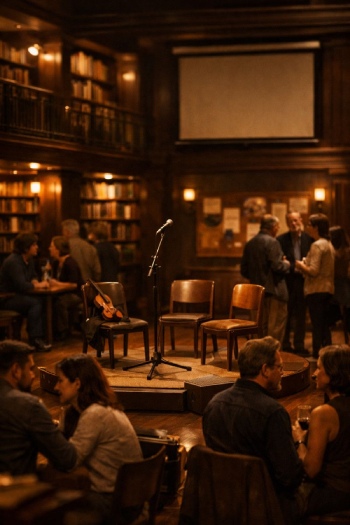
Through most of the twentieth century, libraries were formal institutions of inhibition. Silence ruled, movement was restricted and human interaction took a back seat to solitary studying. Though this model tends to persist, it has lost sight of its grip upon all but the crux of institutional norms. Presently, librariesare now balancing finer harmony between solitariness and companionship, finding timeto divide the separate rooms in which everybody can talk, network, and perform - the act of so much that is conditional in the essence of the heart of gatherings being taboo once upon a time. This falls in line with other changing perceptions of public space and space use.
Libraries as Stages for Spoken Word
One of the most visible ways libraries act as performance spaces is through spoken-word events. Author readings, poetry nights, panel discussions, and lectures turn reading into something collective and audible. The library becomes a room where voices carry and ideas circulate in real time. These events often attract audiences who may not visit the library otherwise, extending its reach without changing its core purpose.
Unlike commercial venues, libraries host these performances without pressure to sell tickets or merchandise. This creates a different atmosphere. Speakers and audiences tend to engage more openly, and conversations often continue after the formal event ends. The library supports this exchange by offering a neutral, welcoming setting that belongs to everyone present.
Music, Film, and Performance Beyond the Page
Many libraries now host concerts, film screenings, and theatrical performances. These activities may seem far removed from traditional library functions, yet they fit naturally within the idea of shared cultural access. Music performances, for example, often take place in reading rooms or atriums, using the building’s acoustics and openness to shape the experience.
Film screenings and live performances also position libraries as cultural venues without commercial barriers. Audiences are not customers but participants. The focus is on access, exposure, and discussion rather than profit. This reinforces the library’s role as a public institution that supports cultural life in ways other spaces cannot.
Participation Over Spectatorship
What distinguishes library performances from those in theaters or concert halls is the emphasis on participation. Workshops, open mics, and community storytelling sessions invite people to step onto the stage themselves. The boundary between performer and audience is often thin or temporary.
This participatory approach aligns with the library’s educational mission. People are encouraged to experiment, share, and learn in public without the expectation of professional polish. The result is a space where creativity feels accessible rather than intimidating, and where performance is understood as a form of learning and connection.
Libraries as Social Infrastructure
Libraries are the kind of social infrastructure that people take for granted because they are so some familiar. Who is often warm and has seating, possibly a toilet, not to mention a place to be without an unspoken obligation to buy anything, makes them an even better meeting place, especially in cities where the public indoors are becoming rarer by the day. Performances and activities held in such shared locations give it more value because of some forward interest on those levels.
The most sensitive aspects are always most pronounced during transitions. This trend decides that the library regularly provides a meeting place, sharing sessions, and informations and occasions helping the community with joint power and full commitment. They also give the strict, solid platform to social lives.
Neutral Ground in Divided Communities
Libraries are among the few civic spaces widely perceived as neutral. They are not aligned with political parties, religious groups, or commercial interests. This neutrality allows them to host discussions and performances that might be difficult to place elsewhere. Public debates, cultural dialogues, and educational talks can happen under one roof without signaling exclusion.
Because libraries are trusted institutions, people are more willing to attend events that challenge their views or introduce unfamiliar perspectives. The setting encourages listening as much as speaking, which is essential for meaningful public exchange. In this sense, the library itself becomes part of the performance, shaping how people relate to one another.
Intergenerational Gathering Spaces
Few public places successfully bring together people of different ages, backgrounds, and routines. Libraries do this regularly. Children’s story hours, teen workshops, adult lectures, and senior discussion groups often happen in the same building, sometimes on the same day.
This intergenerational mix influences the character of library performances. Events are often designed to be accessible, inclusive, and educational without being simplified. Performers and facilitators must consider a diverse audience, which can lead to richer, more thoughtful programming that reflects the community as a whole.
Everyday Encounters as Informal Performance
Not all performance in libraries is planned or announced. Everyday interactions also take on a performative quality. A librarian leading a workshop, a community member presenting a local history project, or a group rehearsing in a meeting room all contribute to a sense of shared activity.
These moments may not draw large audiences, but they reinforce the idea that the library is a place where people do things together. The building supports visible effort and expression, making learning and participation part of the public environment rather than something hidden away.
Designing Libraries for Gathering and Performance
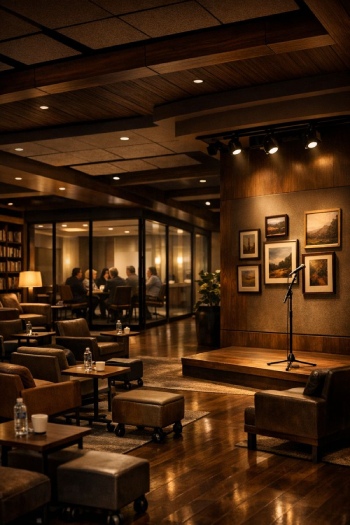
In shaping libraries as spaces of gathering and performance, library architecture plays a prominent part, those which were once largely arranged around a big reading hall that could also accommodate functions, newer constructions being more open and flexible with its spaces. Mobile furniture, adaptable lighting, and multi-purpose rooms give the library the strength to just as easily switch from quiet reflection to lively acts of programming.
Can you see designs as suggesting particular behaviors expected from library users, like by providing open-stage areas, gallery walls, or maybe decorated meeting spaces the library suggests extended explanation on its need for excitement and participation? Thus, by doing so, all these spaces call for one to stay and enjoy mingling-a habitat to observe and get involved.
Flexibility as a Core Principle
Modern libraries increasingly prioritize flexibility over fixed purpose. A room that serves as a lecture hall in the evening might function as a study space during the day. This adaptability makes it easier to host performances without displacing other users.
Flexible design also supports experimentation. Libraries can try new formats, respond to community interests, and adjust programming without major structural changes. This responsiveness helps keep libraries relevant as cultural habits evolve.
Acoustics, Visibility, and Openness
Performance requires attention to sound and sightlines, even in informal settings. Libraries that host regular events often invest in acoustic treatments, sound systems, and lighting that enhance the experience without overwhelming the space.
Visibility matters as well. Events that are partially visible from other parts of the library can spark curiosity and invite spontaneous participation. Openness reduces the sense that performance is reserved for a select audience, reinforcing the idea that cultural activity is part of everyday life.
Balancing Quiet and Activity
One of the ongoing challenges for libraries is balancing their traditional role as quiet spaces with their function as active gathering places. Successful libraries manage this through zoning, clear communication, and thoughtful scheduling.
Rather than enforcing silence everywhere, libraries differentiate between areas intended for study and those meant for conversation or performance. This approach respects diverse needs while allowing the institution to serve multiple roles simultaneously.
Programming as Cultural Practice
Library programming is more than just a series of events. It is an enacted cultural practice that reflect values and priorities. Decisions about what to program - who to ask, how to facilitate interaction - shape the library's identity as stage.
Local Voices and Community Storytelling
Many libraries prioritize programs that highlight local voices. Storytelling nights, oral history projects, and community archives turn residents into performers and historians. These events validate everyday experiences and recognize cultural knowledge that might otherwise go unrecorded.
By offering a stage for local narratives, libraries strengthen their connection to place. The performances become acts of collective memory, reinforcing the idea that the library belongs to the community it serves.
Educational Performance Formats
Workshops, demonstrations, and interactive talks blend education with performance. A science demonstration, a craft workshop, or a language class involves presentation, participation, and shared focus. The learning process becomes visible and social.
These formats benefit from the library’s non-commercial setting. Participants can focus on curiosity and skill-building rather than outcomes or credentials. The emphasis is on engagement rather than evaluation.
Accessibility and Inclusion in Programming
Libraries often design programs with accessibility in mind. Free entry, clear communication, and accommodations for different abilities make performances more inclusive. This attention to access expands who feels welcome to attend and participate.
Inclusion also influences content. Libraries may host multilingual events, culturally specific programs, or discussions addressing local concerns. Performance becomes a tool for representation, helping diverse communities see themselves reflected in public space.
One Shared Space, Many Uses
Physical libraries successfully act as merging and performance spaces, supporting multiple purposes without dictating a solitary mode. This section aims to introduce and show examples of multiple uses.
The following examples show different library programs and activities and how they exist together in the same institution:
- Readings, lectures, and panels that bring ideas into conversation
- Workshops and classes that seek to get some learning done between actually doing something, as in art or craft
- Concerts, movies, and theatre that bring a humane culture rather than one of commerce
- Community meetings and forums that use that same space-indirectly-to command neutrality and trust
Why Libraries Still Matter as Cultural Stages
Libraries survive not so much by resistance to change but by absorbing change in a reflective manner. They are thus operational locus for performance and gathering that point to yet another way through which public institutions can support a definitive culture without exclusivity on the one hand and the sheer commercial on another.