From Fixed Institutions to Flexible Cultural Spaces
The libraries and theaters were previously in a way rather heightened by definition. A library has its pile of books. It does not entertain noise. The theater was going to display a registered performance for limited, seated audience participation at a set time. While this tarnished reputation has irretrievably tarnished anything too long, some mechanisms must be recycled, along with the advent in the business environment, digital access, and overall changes in the community needs driving these two empty shells to be considered how they will use space and clientele.
Libraries as Multi-Use Public Infrastructure
Modern libraries function less like storage facilities and more like civic infrastructure. Alongside shelves of books, many now offer study rooms, lecture spaces, digital labs, and areas designed for conversation rather than silence. This reflects a broader understanding that access to information also means access to space, tools, and time. For people without reliable internet, quiet homes, or private offices, libraries fill a gap that digital platforms alone cannot.
This evolution also changes how librarians work. Their role increasingly involves guidance rather than gatekeeping. Helping users navigate digital archives, verify sources, or learn new skills has become as important as managing collections. The library remains grounded in trust and public service, but the form that service takes has become far more varied.
Theatre Buildings Beyond the Stage
Theatre spaces have followed a similar path. Many theatres now operate throughout the day rather than only during evening performances. Rehearsal rooms host workshops, foyers become informal gathering places, and stages are used for readings, discussions, and experimental formats. This expanded use reflects a desire to make theatre less distant and more embedded in everyday life.
Importantly, this does not mean lowering artistic standards or turning theatres into general event halls. Instead, it recognises that the act of performance includes preparation, dialogue, and reflection. By opening these processes to the public, theatres invite audiences to engage with storytelling in a more layered and participatory way.
Digital Tools Without Digital Replacement
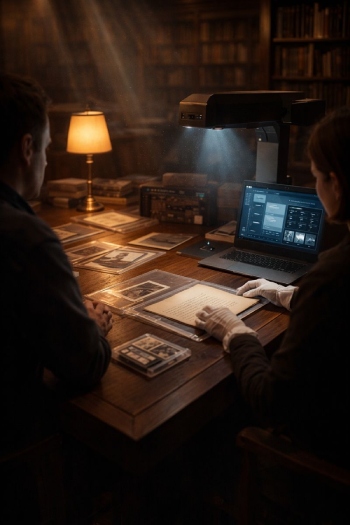
The library and theatrical performance worlds have been influenced by technology, but this does not mean that they are any less physical. Tech has only increased their feeling of commonality even when they are out of sight and earshot. Online library catalogues for public viewing, streamed plays, digital memorabilia for a play, give citizens the liberty to read or watch a performance on their terms but also acknowledge the worth of that shared experience.
The objective of triplicate access entails alternate experience and understanding. Technology serves to let people through the front door in exchange and not to grab away that human touch on which a theater and library thrive.
Digital Archives and Expanded Memory
Libraries have embraced digitisation as a way to preserve and share materials that would otherwise remain fragile or inaccessible. Manuscripts, recordings, and local histories can now be viewed by people far beyond a single city. This has changed who can participate in research and cultural memory, breaking down barriers that once limited access to specialists or nearby residents.
At the same time, digital archives raise new responsibilities. Decisions about what gets digitised, how it is described, and who controls access shape future understanding. Libraries increasingly see their role as stewards of context, not just content, ensuring that digital materials are presented with care rather than stripped of meaning.
Streaming, Recording, and the Theatre Experience
Theatre has traditionally resisted recording, emphasising the uniqueness of live performance. While that belief still holds, many companies now record or stream productions to reach audiences who cannot attend in person. This includes people in remote locations, those with mobility limitations, or audiences curious but hesitant to commit to a live event.
Rather than replacing live theatre, these recordings often act as introductions. They lower the threshold for engagement while reinforcing what cannot be replicated on screen: shared attention, physical presence, and the unpredictability of live performance. The digital version becomes a doorway, not a substitute.
Hybrid Formats and New Forms of Participation
Both libraries and theatres are experimenting with hybrid formats that combine physical and digital participation. A library talk might include an in-person audience alongside online viewers who can ask questions remotely. A theatre production might incorporate live chat, recorded segments, or interactive digital elements without abandoning the core act of performance.
These experiments are not always polished, and that is part of their value. They test assumptions about attention, access, and authorship. By allowing for imperfection, libraries and theatres keep their practices responsive rather than rigid.
Preserving Foundations While Changing Methods
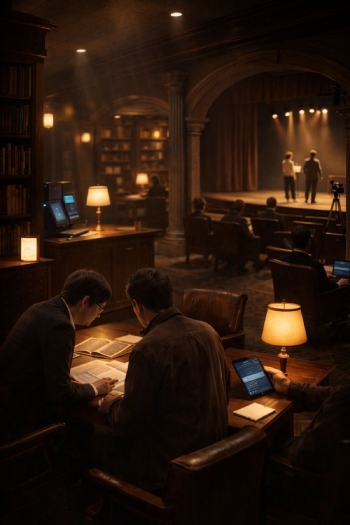
It is believed that, contrary to the visible changes created by the passage of time, some fundamental ideologies have remained strikingly intact as far as the very purpose of these two very powerful entities of society is concerned. Being built entirely on public access, shared narratives, and mutual consent that knowledge and story are the most powerful when participated in by all at once, apparent changes, therefore, were on method, not mission.
It is continuous energy tied to what has kept these institutions important. In an environment wherein we are surrounded daily by Twitter feeds coupled with what we do not hear, libraries and theatres provide a valuable service: a place where we can hold common reference points and shared cultural ground for all.
Trust, Curation, and Human Judgment
Libraries are trusted because they curate rather than simply accumulate. In an age of unlimited information, this role has become more important, not less. Librarians help users distinguish between sources, understand context, and recognise bias. That human judgment cannot be automated without loss.
Theatre offers a parallel form of curation. Choosing which stories to stage, how to frame them, and who gets to tell them reflects cultural priorities. Audiences may disagree with those choices, but the act of selection itself signals care and intention, setting theatre apart from algorithm-driven content.
Shared Time as Cultural Value
Both libraries and theatres create structured time. A library visit sets aside hours for focus or learning. A theatre performance asks audiences to arrive, sit, and pay attention together. These shared rhythms stand in contrast to on-demand culture, where engagement is fragmented and easily interrupted.
This shared time supports deeper forms of attention. It allows ideas and emotions to develop without constant distraction. Even as formats become more flexible, libraries and theatres continue to protect spaces where sustained focus is possible.
Continuity Across Generations
Libraries and theatres connect generations through repeated use of familiar spaces. A child attending story time in a library may return decades later for research or community events. Someone who sees their first play as a student may later attend with friends or family. This continuity builds cultural memory that extends beyond individual experiences.
Adapting services does not erase this continuity. Instead, it refreshes it, ensuring that new generations find reasons to return rather than viewing these institutions as relics of another era.
Access, Inclusion, and Changing Audiences
One of the most significant pressures shaping libraries and theatres today is the demand for broader inclusion. Audiences are more diverse, expectations are higher, and historical exclusions are being examined more openly. Adaptation here involves not just technology, but values and decision-making.
Responding to these pressures has led both institutions to reconsider who feels welcome, whose stories are told, and how barriers—financial, physical, or cultural—can be reduced without diluting purpose.
Rethinking Who Libraries Serve
Libraries increasingly recognise that neutrality can mask exclusion. Policies around fines, identification, and behaviour have been re-evaluated in many places to ensure that vulnerable users are not pushed out. Offering multilingual resources, accessible formats, and targeted programmes helps libraries reflect the communities they serve.
This does not mean abandoning standards, but applying them with awareness. The goal remains public access, interpreted in ways that account for unequal starting points rather than assuming a uniform user experience.
Broadening the Theatre Audience
Theatre has long struggled with perceptions of elitism. Ticket pricing, unfamiliar conventions, and cultural references can all act as barriers. Many theatres now address this by offering varied pricing models, relaxed performances, and outreach programmes that introduce theatre without requiring prior knowledge.
These efforts recognise that appreciation often follows exposure. When people feel that a space is open to them, curiosity replaces hesitation. The challenge lies in expanding access while maintaining artistic integrity, a balance that theatres continue to negotiate.
Representation and Authorship
Questions about who creates content are as important as who consumes it. Libraries are reassessing collection practices to include voices historically underrepresented. Theatres are commissioning and staging work by a wider range of writers, directors, and performers.
This shift reshapes the stories available for collective reflection. It does not rewrite history, but it adds missing perspectives, making shared narratives more accurate and more relevant to contemporary audiences.
Looking Forward Without Losing Ground
The future of libraries and theatres is unlikely to follow a single path. Local needs, funding structures, and cultural contexts will shape how each institution evolves. What remains consistent is their capacity to adjust without surrendering their core purpose.
Rather than chasing novelty, libraries and theatres tend to move carefully, testing changes while preserving what works. This measured pace may seem slow compared to digital platforms, but it allows adaptation to remain grounded rather than reactive.
Experimentation as Ongoing Practice
Small-scale experiments have become a normal part of institutional life. Pilot programmes, temporary installations, and limited-run performances allow libraries and theatres to explore new ideas without committing fully until they understand the impact.
This approach values learning over perfection. Not every experiment succeeds, but each one informs future decisions. Over time, this accumulation of practical knowledge drives meaningful change without abrupt disruption.
The Enduring Need for Physical Gathering
Despite advances in remote access, the desire to gather physically has not disappeared. Libraries and theatres continue to draw people seeking experiences that cannot be replicated alone. The act of being present with others remains central to how stories and knowledge are absorbed.
As long as this need exists, physical spaces will retain their importance. Digital tools may alter how people arrive there, but they do not replace the value of shared presence.
Shared Stories, Sustained Relevance
Libraries and theaters did not survive by doing the same day in, day out. They have moved past the abyss to adjust cautiously, driven by their own clarity and not by what everyone else is seeing as fashionable. The implementation of digital technologies alongside other newer technologies and changes in different trends have changed their operational parameters but have not altered their essence. By still preserving shared dreams, shared durations, and shared places, they remain repositories of what is basic-necessary in a largely fragmented cultural environment.