The Script as a Starting Point, Not a Finished Object
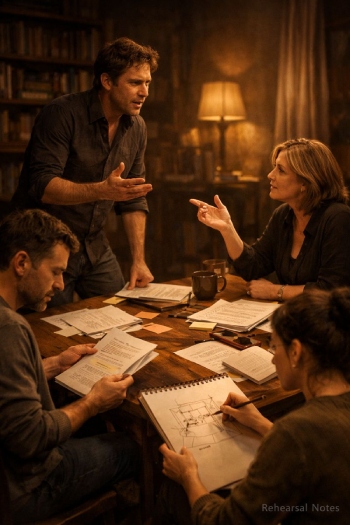
Individual scripts may seem complete when read singly, with their dialogue, stage directions, and sequence of definitive events. Nevertheless, in practice the script is more analogous to an idea about a play than the play itself, highlighting possibilities rather than dictating specifics. To directors, actors, and designers, the text is just a raw material to be cut into shape, and not just a voice to be blindly followed.
Reading for Action Rather Than Description
Unlike novels or essays, scripts are written to be done. Even when a script includes descriptive passages, those descriptions must be translated into physical behavior. Actors and directors read lines with an eye toward action: what a character wants, what they are trying to change, and how they attempt to do so in the moment.
This approach alters how text is understood. A sentence that seems passive on the page may become confrontational when spoken aloud. A polite phrase may carry threat depending on timing and delivery. Reading for action forces the production team to ask practical questions that the text alone cannot answer, such as how close characters stand or when silence carries more weight than speech.
The Role of Subtext in Performance
Subtext is what lies beneath the written words. It includes motivations, emotional states, and unspoken conflicts that are not explicitly stated. While readers may imagine subtext privately, performers must externalize it through voice, gesture, and movement.
Different productions can emphasize different layers of subtext without changing a single line of dialogue. A pause can suggest hesitation, manipulation, or fear. Eye contact can reframe a neutral exchange as intimate or hostile. This flexibility allows the same text to support multiple interpretations, all grounded in the same written material.
Stage Directions as Suggestions, Not Rules
Stage directions often look authoritative on the page. They specify entrances, exits, and sometimes emotional states. In practice, these directions are negotiated. Some are followed closely, while others are adapted or ignored to suit the production’s vision.
This does not mean the text is treated carelessly. Instead, stage directions are weighed against practical concerns and interpretive goals. A direction written for a large stage may not work in a small venue. An emotional instruction may conflict with the actor’s understanding of the character. These decisions reflect the idea that the script guides performance but does not control it entirely.
Interpretation and Authority in the Rehearsal Room
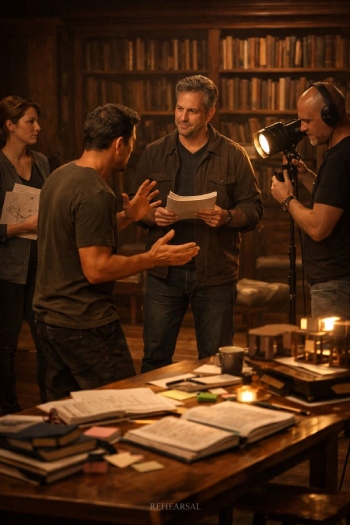
During rehearsals, interpretation becomes more hands-on than merely conceptual. What was considered to be abstract in discussion will very quickly become practical once space is occupied by the physical form of actors. This is a process where authority becomes an imprint of negotiation and collective work rather than the assertion or dominance of any one individual.
Before dissecting role specifics, it's important to understand the peculiar environment that rehearsal demands. It is a workshop for testing, modifying, or discarding ideas. This Empire of experimental thinking is open, high relevant in converting text into act, because-it needs a script to interact and reflect the live realities of theatre.
The Director as Interpreter and Organizer
The director often serves as the primary interpreter of the text. They propose an overall approach that frames how the script will be understood. This includes decisions about tone, tempo, and thematic emphasis. However, their authority is less about control and more about coordination.
A director listens to actors’ discoveries and integrates them into the larger vision. When successful, this process feels dialogic rather than hierarchical. The director’s reading of the text evolves through rehearsal, shaped by what works in practice rather than what seemed compelling on paper.
Actors Translating Text into Behavior
Actors are responsible for turning written lines into lived experience. This involves memorization, but more importantly, interpretation. An actor must decide how a line is spoken, what physical actions accompany it, and how it connects to what came before and after.
These choices are rarely fixed from the start. As actors rehearse, they adjust based on feedback, discoveries, and interactions with other performers. The text becomes something they inhabit rather than recite. This embodiment is where much of theatre’s expressive power emerges.
Designers Giving the Text a Physical World
Set, costume, lighting, and sound designers contribute interpretations of the text through visual and auditory elements. Their work shapes how the audience understands time, place, and mood. A minimal set can focus attention on language, while an elaborate design can suggest social context or emotional states.
Design choices often respond to ambiguities in the script. If a text is vague about setting, designers fill in those gaps. These decisions can subtly shift meaning, emphasizing certain themes while downplaying others. In this way, design becomes another layer of interpretation rather than mere decoration.
Voice, Body, and Space: The Physicalization of Language
At that moment, words should not only be read but also articulated; words are transformed in these ways. Thus, while the spoken word clearly embodies reality, the same words on paper appear subject to a host of interpretations and perhaps full of obscurities. On the contrary, more physical presence can give damaging intensity to a sentence that may not qualify at all for such deepening on paper.
An important orientation to keep in mind regarding the specific elements is the fact that in time present, theatre is a live experience. The text comes alive for spectators through a shifting combination with movement, sound and related space. Meaning is thus engendered via the intersection of these media, rather than the mere text.
Vocal Choices and Emotional Meaning
Voice is one of the most immediate tools for shaping text. Pitch, volume, speed, and rhythm all influence how lines are perceived. A calm delivery can make harsh words sound controlled, while a raised voice can turn a mild sentence into an accusation.
Actors also use silence as a vocal choice. Pauses allow meaning to settle or create tension. These moments are not usually written into the script but emerge through rehearsal. They demonstrate how performance adds layers to text without altering its content.
Gesture and Movement as Language
Physical movement communicates alongside spoken words. A gesture can reinforce dialogue or contradict it. For example, a character who speaks confidently while shrinking away sends a mixed message that invites interpretation.
Movement also structures attention. Where an actor stands, when they cross the stage, and how they interact with objects all shape how the audience follows the story. These choices turn the abstract flow of text into a visible sequence of actions.
The Use of Space and Proximity
Space influences relationships. Distance between characters can suggest intimacy, conflict, or indifference. Changes in spatial arrangement often signal shifts in power or emotional alignment.
Directors and actors use space to clarify or complicate the text. A confrontation staged face to face feels different from one delivered across the stage. These spatial decisions help translate written dynamics into physical experience.
Adaptation and Transformation Across Contexts
Not all texts reach the stage in their original form. Adaptation involves reshaping material to suit new contexts, audiences, or artistic goals. This process raises questions about fidelity and change.
Before listing common strategies, it is worth noting that adaptation is not inherently about improvement. It is about suitability. A text written for one medium or era may require adjustment to function effectively in another.
Common Approaches to Adaptation
Transformation in any number of ways, from subtle changes to poetic license. Some fit performance time frames, for instance, whereas other radically challenge audience expectations.
- Cutting short or diminishing term length to fit performance time
- Changing language to become understood by contemporary audience
- Presenting the play from the view of a different character
- Placing the play in another cultural or historical context
- Non-textual elements such as movement or music
The list goes on as to how each choice reshapes understanding of those original words. It is because, after all, these strategies result from matters of practical necessity and artistic intent.
Balancing Respect and Reinvention
Adaptors often navigate tension between honoring the source and asserting a new vision. Too much change can alienate audiences familiar with the original. Too little can result in a static or inaccessible performance.
Successful adaptations tend to identify what matters most in the source text and build around that core. This approach treats the original work as a foundation rather than a constraint, allowing it to speak differently in a new setting.
Audience Expectations and Interpretation
Audiences bring their own assumptions to adapted works. Familiarity with the source can shape how changes are perceived. Some viewers look for recognition, while others welcome surprise.
Theatrical adaptation engages these expectations directly. By playing with what audiences think they know, performances can invite reflection on why certain elements matter. In this way, adaptation becomes a conversation rather than a translation.
Performance as a Living Interpretation
Even after opening night, the transformation from page to stage continues. Performances evolve as actors adjust timing, energy, and focus. The text remains the same, but its expression shifts.
Before concluding, it is important to recognize that no performance is final. Theatre exists in time, shaped by the specific moment in which it occurs. This impermanence is part of what distinguishes it from the written word.
Variation Between Performances
No two performances are identical. Small changes in delivery, audience response, or technical conditions alter how the text is received. Actors respond to laughter, silence, or tension in the room, subtly adjusting their approach.
These variations do not undermine the script. Instead, they demonstrate its flexibility. The text supports multiple live expressions, each shaped by circumstance.
The Audience as an Active Participant
An audience completes the transformation of text into performance. Their reactions influence pacing and emphasis. Even quiet attention shapes the atmosphere of a show.
Unlike readers, audience members experience the text collectively. This shared experience adds another layer of meaning, as responses are felt and heard across the room. The text becomes part of a social event rather than a private encounter.
Why the Journey From Text to Performance Matters
The move from the page to the stage really suggests that meaning is made in action, interpretation, and cooperation. Texts become multi-dimensional when embodied, spoken, and sung in real time. Theatre indicates that the text is not the conclusion but the beginning.