Libraries as Spaces of Open Possibility

Libraries are often portrayed as quiet or thoughtful, but really, they are generative spaces instead of passive locations. They provide a structured pathway for the reader to explore in directions he deems fit. Before attempting to consider any particular mechanized intervention, it is important for us to perceive libraries as spaces that promote curiosity without demanding firm resolutions or outcomes.
The special characteristic of libraries, in contradistinction to classroom or laboratory space, arises out of providing an open-scale environment for the unfolding of exploration at the timing and pace of the individual. With there not being, in life, one stipulated way through material, their valorization in developing levels of the imagination within the given spaces are vast.
Access Without Direction
One of the most distinctive features of a library is that it provides access without imposing a narrative order. Shelves may be catalogued, but readers are free to wander, pause, abandon a book halfway through, or follow an unexpected reference. This freedom supports imaginative thinking because it mirrors how curiosity works in real life, jumping between interests and making unplanned connections.
Without the demand to produce immediate results, readers can linger with uncertainty or contradiction. A person might encounter ideas that challenge assumptions or sit unresolved for years. That long, unfinished engagement is often where creative thought takes shape, as imagination thrives in gaps rather than answers.
Silence as an Active Condition
Silence in libraries is often misunderstood as restrictive, but it functions more like a container. By reducing external noise and interruption, libraries create conditions where internal dialogue becomes audible. Readers begin to hear their own questions, doubts, and associations more clearly, which is essential for imaginative work.
This kind of silence does not erase social presence. Others are nearby, engaged in parallel acts of reading or research. The shared quiet reinforces a sense that thinking itself is a collective activity, even when carried out alone. Imagination grows in this balance between solitude and quiet community.
Libraries and Temporal Depth
Libraries connect readers to voices across centuries, cultures, and disciplines. A single visit might place contemporary concerns alongside ancient philosophy or forgotten histories. This temporal layering stretches imagination by forcing readers to move between different ways of seeing the world.
Engaging with older texts also disrupts the assumption that present-day thinking is final or complete. Readers encounter past imaginations that once felt urgent and real. That encounter encourages humility and flexibility, reminding us that new futures will also be shaped by imaginations we cannot yet fully grasp.
Shared Ownership of Knowledge
Unlike private collections or commercial platforms, libraries operate on shared ownership. The idea that knowledge belongs to everyone, regardless of background or income, changes how people relate to ideas. When access is not gated by purchase or status, imagination becomes less about personal advancement and more about collective enrichment.
This shared framework supports creative risk. Readers may explore topics unrelated to their profession or identity, knowing there is no obligation to justify their interest. That freedom to roam intellectually is a quiet but powerful driver of imaginative growth.
Theatre as a Living Imaginative Practice
Theatre works through presence rather than accumulation. It exists only when people gather, perform, and witness together. Before breaking down specific elements, it is useful to see theatre as an imaginative agreement: performers and audience consent to treat an empty stage as a world full of meaning.
This agreement relies on attention and trust rather than realism. Theatre does not ask audiences to believe everything they see, but to engage actively in creating significance through interpretation.
Embodied Storytelling
Theatre activates imagination through bodies in space. Unlike written narratives, which unfold internally, theatrical stories are shaped by movement, voice, and timing. Audiences must interpret gesture, tone, and silence, filling in emotional and narrative details that are never fully stated.
Because each performance is slightly different, imagination stays alert. Small variations in delivery or staging invite new interpretations, even for familiar texts. This unpredictability keeps audiences mentally involved rather than passively consuming a fixed version of a story.
Minimalism and Suggestion
Many theatrical traditions rely on suggestion rather than detailed representation. A chair might become a throne, a gesture might suggest a battlefield. This economy of means requires audiences to supply missing elements from their own imagination.
By not showing everything, theatre respects the audience’s creative capacity. Viewers are not overwhelmed with information; instead, they are invited to collaborate in constructing meaning. This shared act of imagination strengthens attention and deepens emotional engagement.
Collective Emotional Experience
Watching a performance alongside others shapes how imagination functions. Laughter, tension, or silence spreads through the room, creating a shared emotional rhythm. Individuals respond not only to the performance, but to the presence of other viewers responding at the same time.
This collective awareness sharpens perception. People notice moments they might miss alone, guided by shifts in audience energy. Imagination becomes social, shaped by mutual responsiveness rather than isolated interpretation.
Risk and Vulnerability on Stage
Theatre is built on risk. Performers cannot edit or revise in real time, and mistakes become part of the event. This vulnerability invites audiences to imagine outcomes as they unfold, heightening attention and emotional investment.
Seeing people take creative risks in front of others encourages empathy and courage. Audiences witness not only stories, but the act of storytelling itself. That awareness reinforces imagination as a human practice rather than a polished product.
Where Libraries and Theatre Intersect
In many ways, libraries and theatres function differently, despite being linked by the same core principles that govern our imaginative existence to some extent. An operation that would entitle it to be called a library or a theatre either encourages active engagement and individual participation or invites passive reception and monotony. To move beyond these principles and provide concrete examples of where these principles intersect requires an understanding that here imagination is not a means of escaping from the world but a way to engage with its complexities-and so with the fundamentals.
Trust in the Audience
Both libraries and theatres assume that people are capable of making meaning on their own. Libraries do not prescribe how books should be read, and theatres do not explain every symbol or motivation. This trust invites responsibility, asking participants to bring curiosity and attention to the experience.
When institutions trust their audiences, imagination becomes reciprocal. Readers and viewers feel respected, which encourages deeper engagement and more nuanced interpretation. That respect is central to sustaining creative cultures over time.
Slowness as a Creative Condition
Neither libraries nor theatres prioritize speed. Reading takes time, and performances unfold at a human pace. This slowness allows ideas and emotions to develop gradually, resisting the pressure for immediate reaction or judgment.
By slowing perception, these spaces make room for ambiguity. Imagination often emerges not from instant clarity, but from sustained exposure to complexity. Slowness gives people the patience to sit with uncertainty and allow new connections to form.
Public Yet Intimate Spaces
Both environments are public, but they foster intimate experiences. A reader absorbed in a book or an audience member moved by a performance feels personally addressed, even while surrounded by others.
This blend of public and private encourages imaginative empathy. People become aware of their own responses while sensing that others may be experiencing something similar or entirely different. That awareness deepens understanding of both self and community.
Continuity Across Generations
Libraries and theatres preserve works from the past while constantly reinterpreting them. Each generation encounters familiar stories under new conditions, bringing fresh perspectives and concerns.
This continuity shows imagination as a shared inheritance rather than an individual achievement. Creative thought evolves through dialogue with those who came before, reminding participants that imagination is sustained through care, memory, and renewal.
Imagination as a Shared Civic Resource
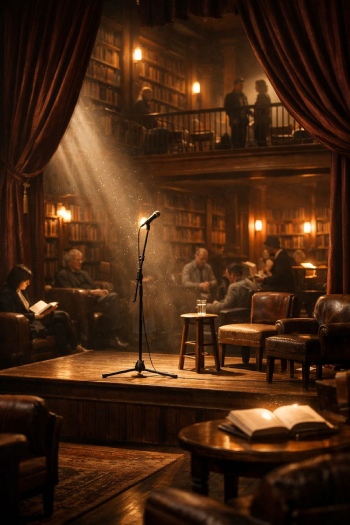
Beyond individual enrichment, libraries and theatres play a civic role. They support informed, empathetic communities by giving people tools to imagine lives, histories, and futures beyond their own experience. Before outlining specific contributions, it is worth noting that this role is often understated.
These institutions do not dictate values, but they create conditions where values can be examined and questioned collectively.
Encouraging Perspective-Taking
Through stories, arguments, and performances, people encounter viewpoints they might never meet in daily life. This exposure stretches imagination by asking participants to inhabit unfamiliar positions, even temporarily.
Perspective-taking builds intellectual humility. Readers and viewers learn that understanding is partial and shaped by context. That awareness supports more thoughtful public conversation and reduces the impulse to oversimplify complex issues.
Safe Spaces for Difficult Questions
Libraries and theatres can address uncomfortable topics without demanding immediate solutions. Fiction, drama, and scholarship allow people to approach sensitive issues indirectly, creating emotional distance that makes reflection possible.
This safety does not mean avoidance. Instead, it allows imagination to engage with complexity without fear of immediate judgment. Over time, such engagement supports deeper understanding and more nuanced responses.
Community Without Uniformity
Participation in these spaces does not require agreement. Readers may interpret the same text differently, and audiences may leave a performance with conflicting reactions. This plurality is not a flaw but a feature.
Imagination flourishes when difference is acknowledged rather than erased. Libraries and theatres model communities where shared experience does not depend on shared conclusions, reinforcing respect for intellectual diversity.
Resilience Through Cultural Memory
In times of uncertainty, these institutions provide continuity. Access to stories and ideas from other periods reminds communities that crisis and change are not new. Imagination draws strength from this awareness, offering ways to think beyond immediate disruption.
By preserving and reactivating cultural memory, libraries and theatres help societies imagine futures informed by past struggles and aspirations.
The Quiet Power of Imaginative Spaces
Moreover, theaters and libraries do not create the conditions to nurture the imagination by "overwhelming" people by means of an external stimulus. Trust is what develops curiosity. Through silence, performance, slowness, space shared, or just presence, two of these shared sympershoot grow. These whispering spaces are always reminding us that imagination does not actualize out of luxury or escapade. It is anointed care, attention, and participation. By maintaining these spaces of united thought and feeling amongst people, libraries and theatres keep alive for creativity, proving to be most relevant no matter what changes in the world.